Skip to content
Introduction: The Importance of NDT in the Oil and Gas Industry
The oil and gas industry relies on a wide range of critical equipment, including valves, pressure vessels, pipelines, drilling tools, and other high-performance components. These parts often operate under extreme conditions such as high pressure, high temperature, corrosion, and cyclic loading.
Even small surface defects or cracks can lead to equipment failure, safety risks, and unexpected downtime. Therefore, reliable Non-Destructive Testing (NDT) methods are essential for ensuring the quality, safety, and long-term reliability of oil and gas equipment.
Among various NDT technologies, Magnetic Particle Inspection (MPI) and Fluorescent Penetrant Inspection (FPI) are widely used for detecting surface and near-surface defects in critical components.
As a professional NDT equipment manufacturer, Nuke provides customized MPI machines, FPI systems, and inspection solutions for oil and gas component manufacturers and service companies.
Common Oil and Gas Components Requiring NDT Inspection
1. Valves and Valve Bodies
Valves are essential components in oil and gas production, transportation, and processing systems. Due to their importance in controlling fluid flow, valve bodies and related components require strict quality inspection.
During manufacturing processes such as casting, forging, and machining, defects including cracks, shrinkage, and surface discontinuities may occur.
Magnetic Particle Inspection (MPI) is commonly applied to ferromagnetic valve components to detect surface and near-surface defects with high sensitivity.
Typical inspected components include:
- Valve bodies
- Valve seats
- Flanges
- Forged valve components
- Pressure-containing parts
2. Pipeline Components and Fittings
Pipeline systems are exposed to continuous pressure and environmental stress. Weld areas, pipe fittings, and connection components require reliable inspection to prevent potential failures.
NDT methods help identify:
- Surface cracks
- Welding defects
- Manufacturing imperfections
- Fatigue-related damage
Customized magnetic particle inspection equipment and penetrant testing solutions can be designed according to component size, production requirements, and inspection standards.
3. Pressure Equipment and Oilfield Components
Pressure vessels, drilling tools, and other oilfield equipment must maintain high structural integrity throughout their service life.
Common components requiring inspection include:
- Pressure vessel parts
- Drilling tools
- Shafts
- Couplings
- Heavy-duty forged components
NDT inspection helps manufacturers verify product quality before equipment enters operation.
Magnetic Particle Inspection (MPI) for Oil and Gas Applications
What Is Magnetic Particle Inspection?
Magnetic Particle Inspection is an effective NDT method used to detect surface and near-surface defects in ferromagnetic materials.
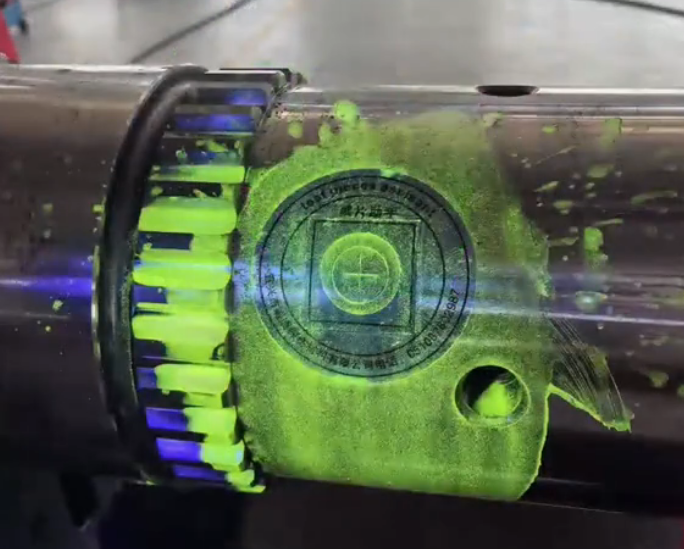
During the inspection process, the component is magnetized, and magnetic particles are applied to the inspection area. Defects that interrupt the magnetic field will attract the particles and form visible indications.
Advantages of MPI for Oil and Gas Components
Magnetic Particle Inspection provides several advantages:
- High sensitivity for detecting cracks
- Fast inspection process
- Suitable for complex component shapes
- Effective for steel and iron-based materials
- Can be integrated into automated production lines
For oil and gas manufacturers, MPI is widely used for inspecting:
- Steel valves
- Forged parts
- Flanges
- Drilling equipment
- Heavy machinery components
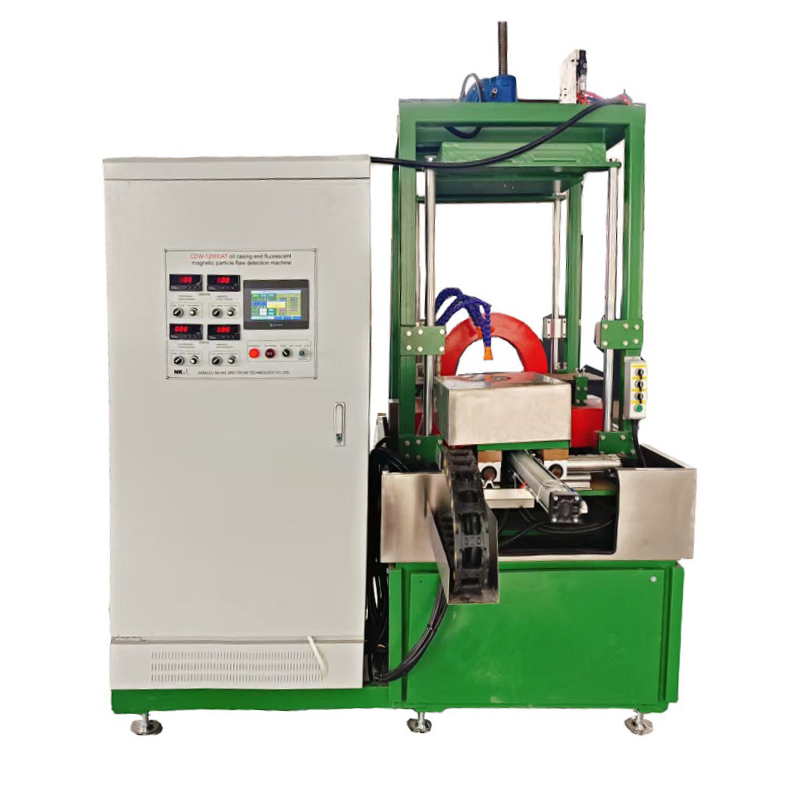
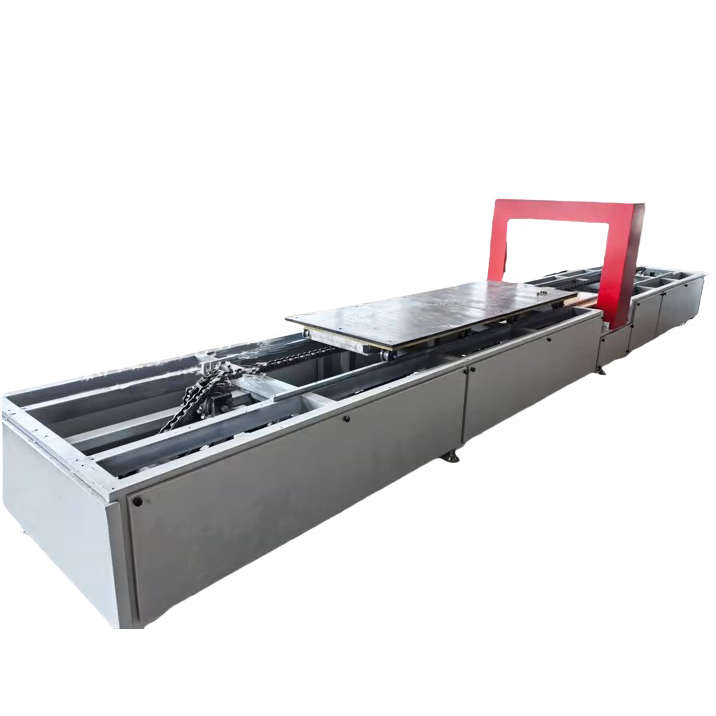
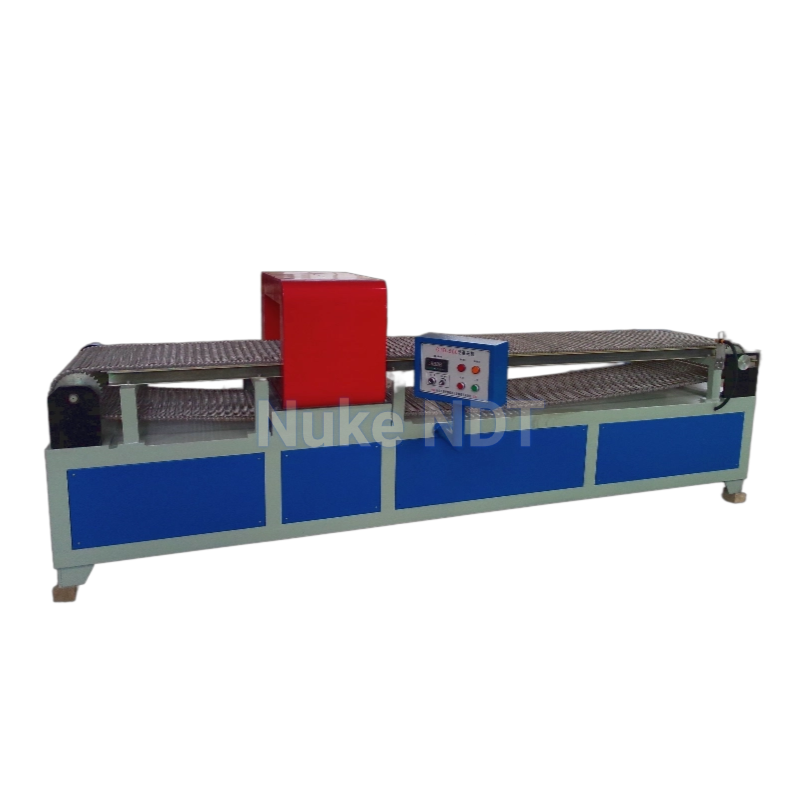
Nuke provides various magnetic particle inspection machines, including bench-type MPI systems, large customized inspection equipment, and automated solutions.
Fluorescent Penetrant Inspection (FPI) Applications in Oil and Gas Industry
What Is Fluorescent Penetrant Inspection?
Fluorescent Penetrant Inspection is a surface inspection method used to detect open-to-surface defects on non-porous materials.
Unlike MPI, FPI does not require the material to be magnetic, making it suitable for:
- Aluminum alloys
- Stainless steel
- Titanium alloys
- Nickel-based alloys
The process uses fluorescent penetrant to enter surface defects. Under UV light inspection, defects appear as bright indications.
Typical FPI Applications
Fluorescent Penetrant Inspection is commonly used for precision components requiring high inspection sensitivity, such as:
- Complex machined parts
- Non-ferromagnetic components
- Special alloy components
- High-value industrial parts
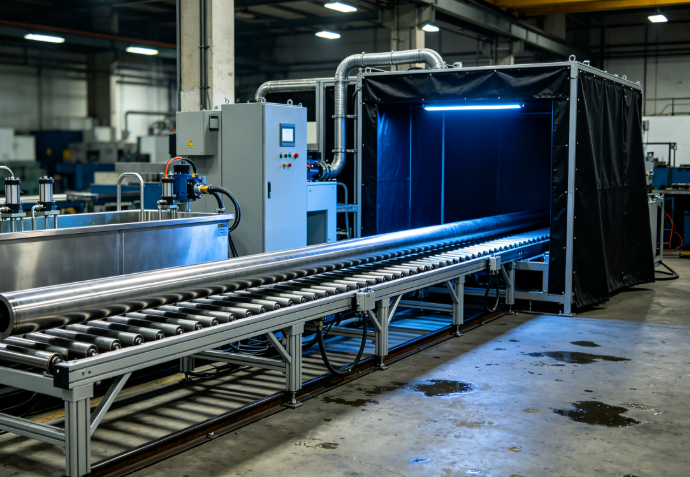
A customized fluorescent penetrant inspection system can include cleaning, penetrant application, emulsification, washing, drying, developing, and inspection processes according to customer requirements.
How to Select the Right NDT Equipment for Oil and Gas Applications
Selecting suitable NDT equipment depends on several important factors.
1. Component Size and Weight
The size and weight of inspected components directly influence equipment design.
For example:
- Small and medium components may use bench-type MPI machines
- Large valves and heavy components may require customized MPI systems
2. Material Type
Different materials require different inspection methods.
- Carbon steel and alloy steel components are commonly inspected by MPI
- Stainless steel, aluminum alloy, and titanium alloy components are often inspected by FPI
Understanding material characteristics helps determine the most suitable NDT solution.
3. Inspection Requirements and Standards
Oil and gas customers may require compliance with international standards, customer specifications, or internal quality procedures.
Common references include:
- ASTM E1444/E1444M for Magnetic Particle Testing
- ASTM E165/E165M for Liquid Penetrant Testing
A professional NDT equipment supplier should provide solutions that meet both technical requirements and production objectives.
Customized NDT Solutions from Newk
Nuke specializes in the design and manufacturing of industrial NDT equipment, providing customized solutions for various industries including oil and gas, aerospace, automotive, railway, and heavy manufacturing.
Our product range includes:
- Magnetic Particle Inspection (MPI) Machines
- Fluorescent Penetrant Inspection (FPI) Systems
- Industrial Cleaning Systems
- Demagnetization Equipment
- Customized NDT Production Lines
With engineering experience and manufacturing capability, Nuke supports customers from process design and equipment configuration to installation and commissioning.
Conclusion
Reliable NDT inspection plays a critical role in ensuring the safety and performance of oil and gas equipment. Magnetic Particle Inspection and Fluorescent Penetrant Inspection provide effective solutions for detecting surface defects and maintaining component quality.
By selecting the right inspection technology and equipment configuration, manufacturers can improve product reliability, reduce failure risks, and meet demanding industry requirements.
As an experienced NDT equipment manufacturer, Newk is committed to providing customized MPI, FPI, and inspection solutions for oil and gas applications worldwide.
Contact us for more solutions.