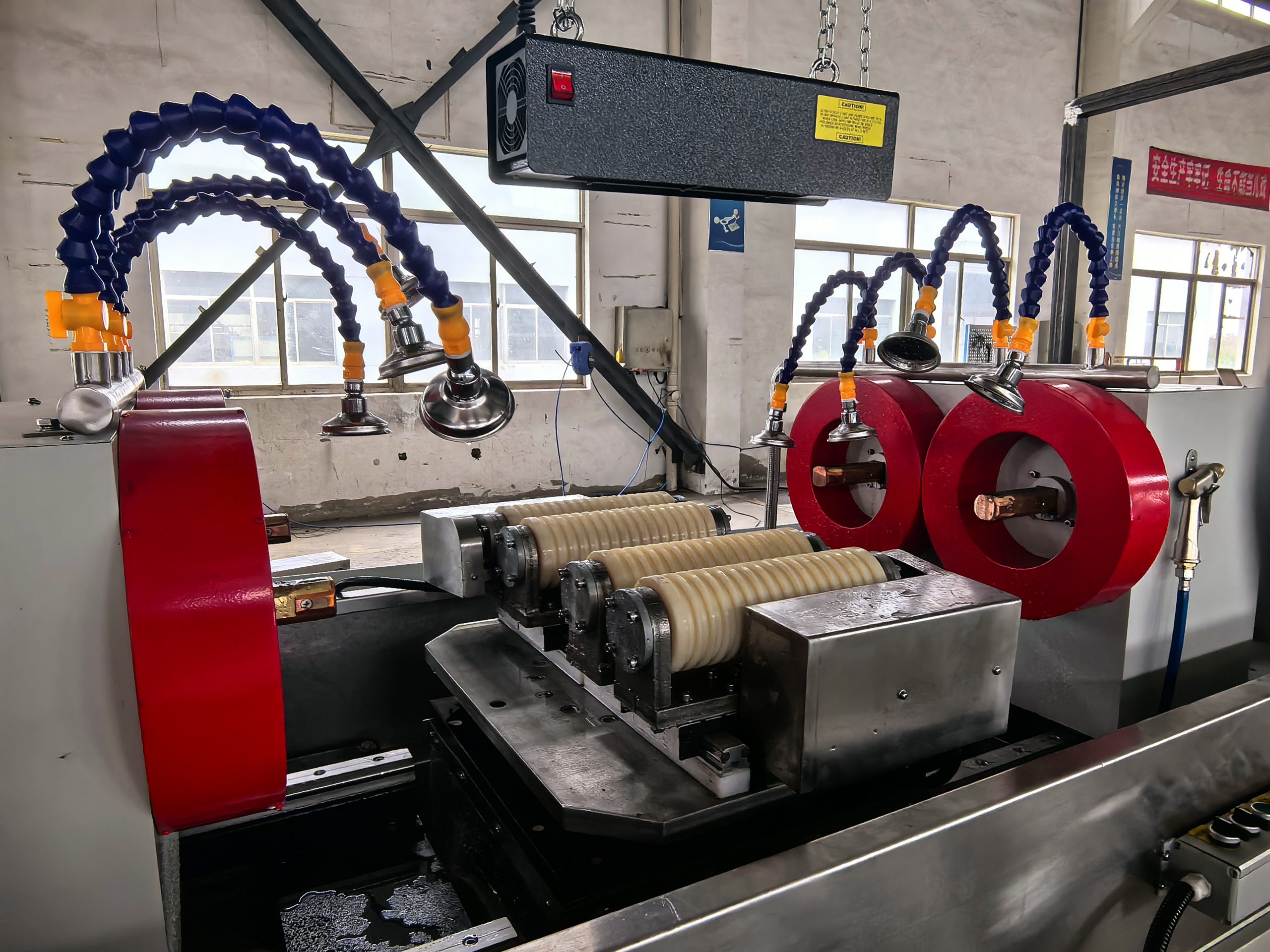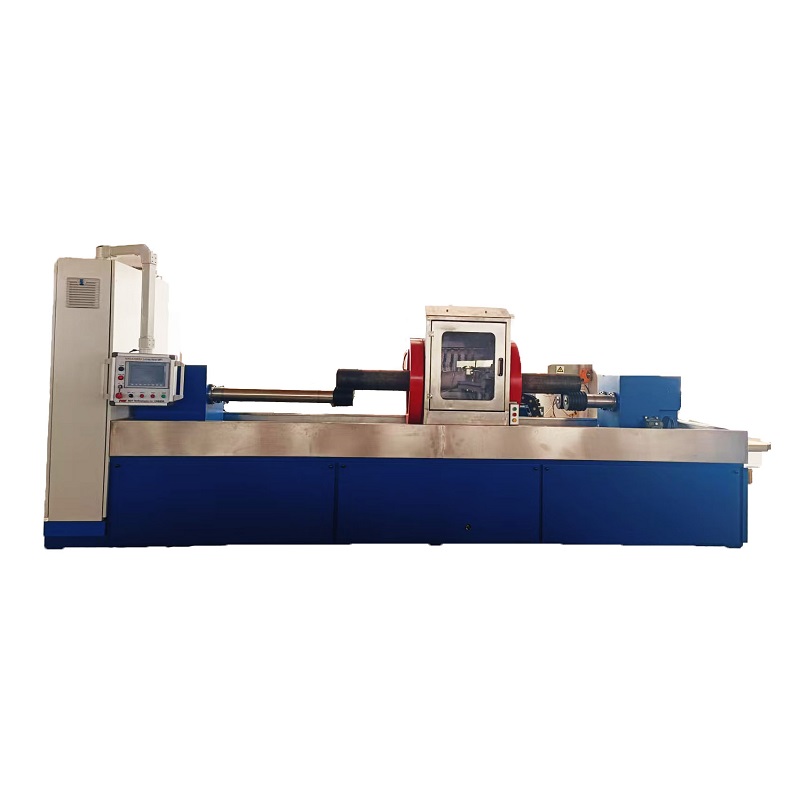
An Inline MPI (Magnetic Particle Inspection) system is an automated non-destructive testing solution integrated directly into a production line. It is designed to inspect ferromagnetic components continuously without interrupting manufacturing flow.
Unlike standalone inspection equipment, inline MPI systems are built for high-throughput environments where consistency, speed, and traceability are critical.
How Inline MPI Systems Work
A typical inline MPI inspection process includes:
- Automatic Loading – Components are transferred from the production line or conveyor system
- Positioning & Clamping – The workpiece is fixed for stable inspection
- Magnetization – Head Shot and/or Coil Shot magnetization is applied
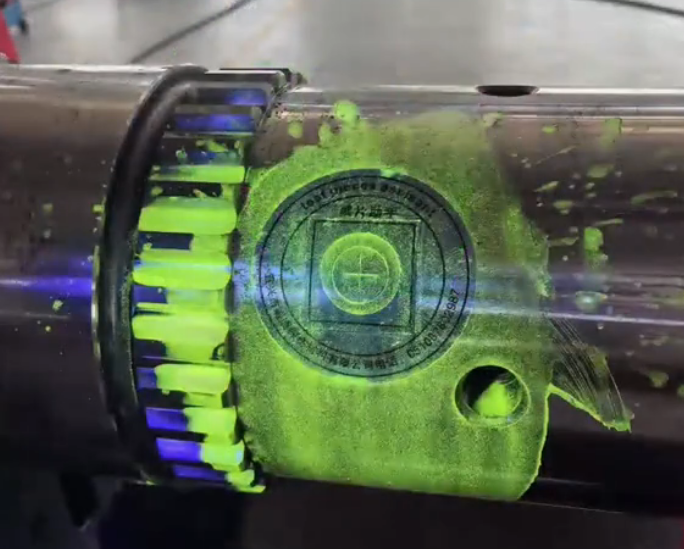
- Magnetic Particle Application – Defects become visible under magnetic field leakage
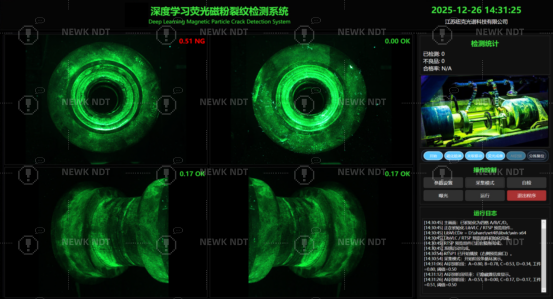
- Inspection Stage – Operators or AI systems evaluate indications
- Demagnetization – Residual magnetism is removed
- Sorting & Unloading – Qualified and unqualified parts are separated automatically
This fully integrated workflow ensures stable inspection quality and high production efficiency.
Key Advantages of Inline MPI Systems
1. High Production Efficiency
Inline systems are designed for continuous operation, making them ideal for mass production environments such as automotive and fastener manufacturing.
2. Stable Inspection Quality
Automated control of magnetization parameters reduces human error and ensures consistent defect detection results.
3. Production Line Integration
Inline MPI systems can be directly integrated into existing production lines, including conveyor systems and robotic handling systems.
4. Reduced Labor Dependency
Automation significantly reduces the need for manual operation, improving efficiency and lowering long-term labor costs.
5. Optional AI Defect Recognition
Modern systems can be equipped with intelligent recognition technology to automatically analyze inspection results and improve accuracy.
Typical Applications
Inline MPI systems are widely used in industries requiring high reliability and safety:
- Automotive components (shafts, gears, transmission parts)
- Fasteners (bolts, screws, studs)
- Forged and cast components
- Railway parts
- Heavy machinery components
- Aerospace structural parts
Inline MPI vs Standalone MPI Systems
Inline MPI systems are designed for production environments, while standalone systems are more suitable for flexible or low-volume inspection tasks.
| Feature | Inline MPI System | Standalone MPI Machine |
|---|---|---|
| Production Mode | Continuous inline | Manual or semi-manual |
| Efficiency | High | Medium |
| Automation Level | High | Medium/Low |
| Application | Mass production | Multi-type small batches |
Why Choose an Inline MPI System?
Manufacturers are increasingly adopting inline MPI systems because modern production requires:
- Faster inspection cycles
- Lower defect escape rates
- Full process traceability
- Integration with smart factories
Inline MPI is no longer just a testing device—it is a critical part of automated quality control systems.
Conclusion
Inline MPI inspection systems provide a reliable and efficient solution for modern industrial production lines. With automation, stable magnetization technology, and optional AI-based defect recognition, they significantly improve inspection consistency and production efficiency.
For manufacturers seeking to upgrade their quality control process, inline MPI systems represent a key step toward intelligent and automated inspection.
Request a Technical Solution
If you need a customized inline MPI inspection system, please provide:
- Workpiece drawings or photos
- Part dimensions and weight
- Required inspection capacity
- Production line layout (if available)
Our engineering team will design a tailored solution based on your requirements.