Skip to content
Shafts are widely used in automotive, railway, aerospace, machinery, power transmission and other industrial applications. Because shafts are often subjected to bending, torsion, fatigue and impact loads during service, surface and near-surface cracks can seriously affect their reliability and service life.
Magnetic Particle Inspection (MPI) is one of the most widely used non-destructive testing methods for detecting surface and near-surface defects in ferromagnetic shafts and shaft components.
This article explains the principles of magnetic particle inspection of shafts, commonly used magnetization methods, equipment requirements and typical industrial applications.
Why Do Shafts Need Magnetic Particle Inspection?
Shafts may develop cracks during forging, machining, heat treatment, grinding or service. Some defects may be very small and difficult to identify through visual inspection alone.
Typical defects that can be detected by magnetic particle testing include:
- Fatigue cracks
- Grinding cracks
- Forging cracks
- Quenching cracks
- Seams
- Laps
- Surface discontinuities
- Other surface and near-surface defects
For critical components such as automotive drive shafts, railway axles and aerospace shaft components, reliable inspection is important for maintaining product quality and preventing premature failure.
Magnetic particle inspection is particularly suitable for these applications because it can provide high sensitivity to small discontinuities and can be integrated into manual, semi-automatic or fully automatic inspection systems.
How Does Magnetic Particle Inspection of Shafts Work?
Magnetic particle inspection works by magnetizing a ferromagnetic workpiece and applying magnetic particles to its surface.
When a crack or other discontinuity interrupts the magnetic field, part of the magnetic flux is forced to leak from the surface. The magnetic particles are attracted to this leakage field and form a visible indication.
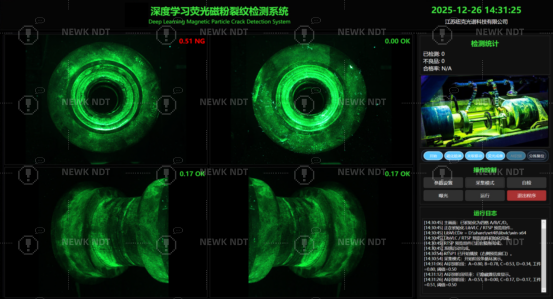
For fluorescent magnetic particle inspection, fluorescent particles are viewed under UV-A illumination in a darkened inspection area, allowing small indications to be detected more easily.
A typical shaft MPI process includes:
Workpiece loading → Cleaning → Magnetization → Magnetic particle application → Inspection → Demagnetization → Unloading
The actual process can be customized according to the shaft geometry, material, production volume and inspection requirements.
Magnetization Methods for Shaft Inspection
The magnetization method is one of the most important factors in shaft magnetic particle inspection.
A single magnetization direction cannot necessarily detect defects in every orientation. Therefore, the appropriate magnetization method should be selected according to the expected defect direction.
1. Circular Magnetization
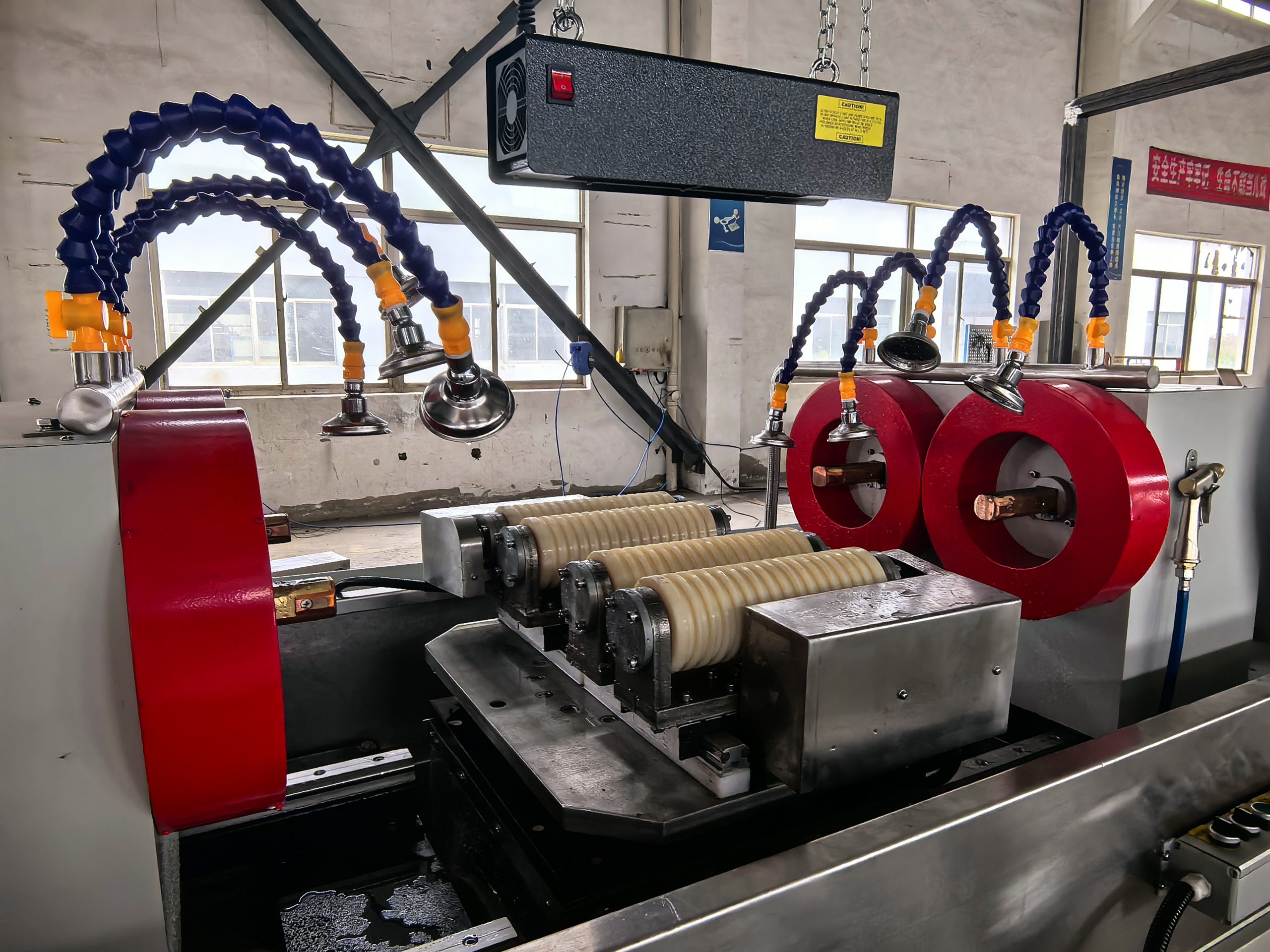
Circular magnetization produces a magnetic field around the shaft.
It is particularly useful for detecting longitudinal cracks because defects approximately perpendicular to the magnetic field create stronger magnetic flux leakage.
Circular magnetization can be achieved by passing current through the shaft between electrical contacts.
2. Longitudinal Magnetization
Longitudinal magnetization produces a magnetic field along the length of the shaft.
It is suitable for detecting defects that are oriented approximately perpendicular to the longitudinal magnetic field, such as circumferential cracks.
Depending on the equipment design, longitudinal magnetization can be generated using coils or other magnetic field arrangements.
3. Combined Magnetization
For critical shaft components, two magnetization directions may be required to improve inspection coverage.
A combined or sequential magnetization process can be used to detect defects with different orientations.
The actual configuration depends on the shaft geometry, material properties, applicable inspection procedure and customer requirements.
Wet and Fluorescent Magnetic Particle Inspection
Wet magnetic particle inspection uses magnetic particles suspended in a liquid carrier. The suspension can be applied to the workpiece by spraying, flowing or other suitable methods.
Compared with dry powder application, wet magnetic particle inspection can provide more uniform particle coverage and is commonly used when high sensitivity is required.
Fluorescent magnetic particle inspection uses fluorescent particles together with UV-A illumination. Under suitable inspection conditions, small indications can be clearly identified against a dark background.
For production inspection of shafts, a wet fluorescent MPI system can be configured with:
- Magnetic particle suspension tank
- Circulation pump
- Filtration system
- Spray or flow application system
- Magnetizing power supply
- Electrical contact system
- UV-A inspection lighting
- White light system
- Demagnetization system
- Control system
The configuration can be adapted to different shaft sizes and production requirements.
How to Choose a Shaft Magnetic Particle Inspection Machine
There is no single MPI machine configuration suitable for every shaft. The equipment should be designed according to the actual workpiece and inspection process.
Shaft Diameter and Length
The maximum and minimum shaft dimensions are important for determining:
- Machine throat size
- Contact spacing
- Coil dimensions
- Workpiece support
- Magnetic field requirements
- Loading and unloading arrangement
Providing the complete shaft dimensional range helps the equipment manufacturer determine the appropriate machine configuration.
Workpiece Weight
The weight of the shaft affects the design of the support and loading system.
For heavier shafts, powered rollers, lifting devices or automatic loading systems may be required.
Magnetizing Current
The required magnetizing current depends on the material, dimensions, geometry and inspection procedure.
An MPI machine may use AC, DC or full-wave DC magnetization depending on the application.
The current control system should provide stable and repeatable magnetization. For production equipment, digital current setting, digital display and closed-loop control can improve process consistency.
AC or DC Magnetization
AC magnetization is commonly used for detecting surface-breaking defects because of its strong surface sensitivity.
DC or full-wave DC magnetization can provide greater magnetic field penetration and may be useful when near-surface defects need to be detected.
The appropriate current type should be determined based on the inspection procedure and applicable standards.
Manual, Semi-Automatic or Automatic Operation
The production environment is another important consideration.
Manual MPI machines are suitable for low-volume production, maintenance inspection and applications where workpieces vary significantly.
Semi-automatic machines can reduce operator workload while maintaining flexibility.
Automatic shaft inspection systems are suitable for high-volume production. They can integrate loading, magnetization, magnetic particle application, inspection, demagnetization and unloading.
For automated production lines, additional functions such as automatic defect indication, part sorting, traceability and data recording can also be considered.
Applications of Shaft Magnetic Particle Inspection
Magnetic particle inspection is widely used for different types of shaft components.
Automotive Shafts
MPI can be used for inspection of:
- Drive shafts
- Axle shafts
- Steering components
- Transmission components
- Universal joint yokes
- Forged shaft components
Inspection can help identify cracks introduced during forging, heat treatment, machining or grinding.
Railway Components
Railway manufacturers and maintenance facilities use non-destructive testing to inspect safety-critical components.
Depending on the application, MPI may be used for:
- Railway axles
- Wheel-related components
- Bogie components
- Forged railway parts
- Other ferromagnetic structural components
Equipment configuration should be selected according to the component geometry and applicable railway inspection requirements.
Aerospace Components
Aerospace components often require high inspection sensitivity and strict process control.
Magnetic particle inspection can be applied to suitable ferromagnetic shaft and structural components where surface and near-surface defect detection is required.
Forged and Machined Shafts
MPI is also commonly used after forging, heat treatment, machining and grinding.
For example, grinding cracks can occur during the grinding process even when the component appears visually acceptable. Magnetic particle inspection can provide an additional quality-control step before the part enters the next production stage.
Automatic Shaft Magnetic Particle Inspection Systems
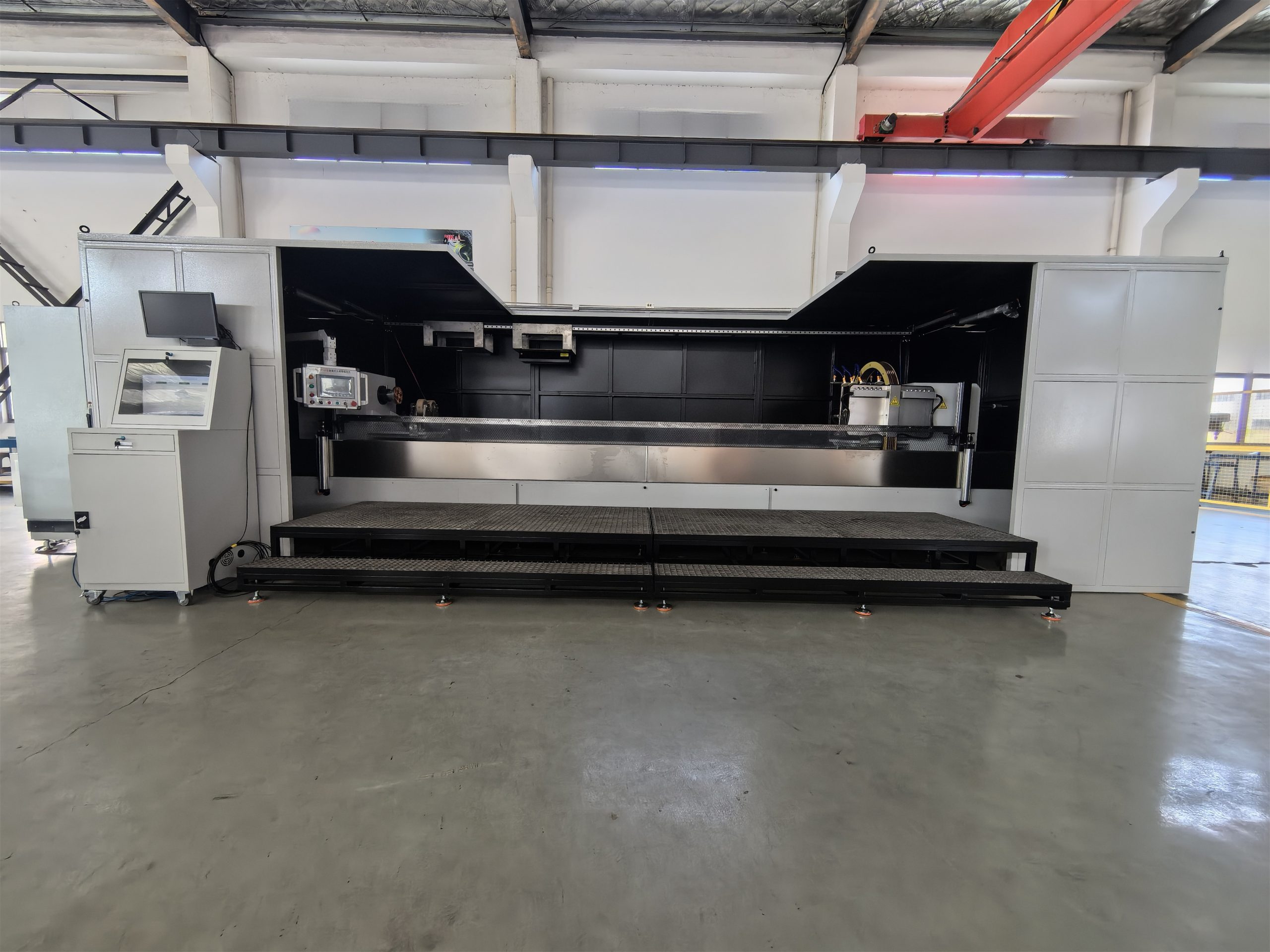
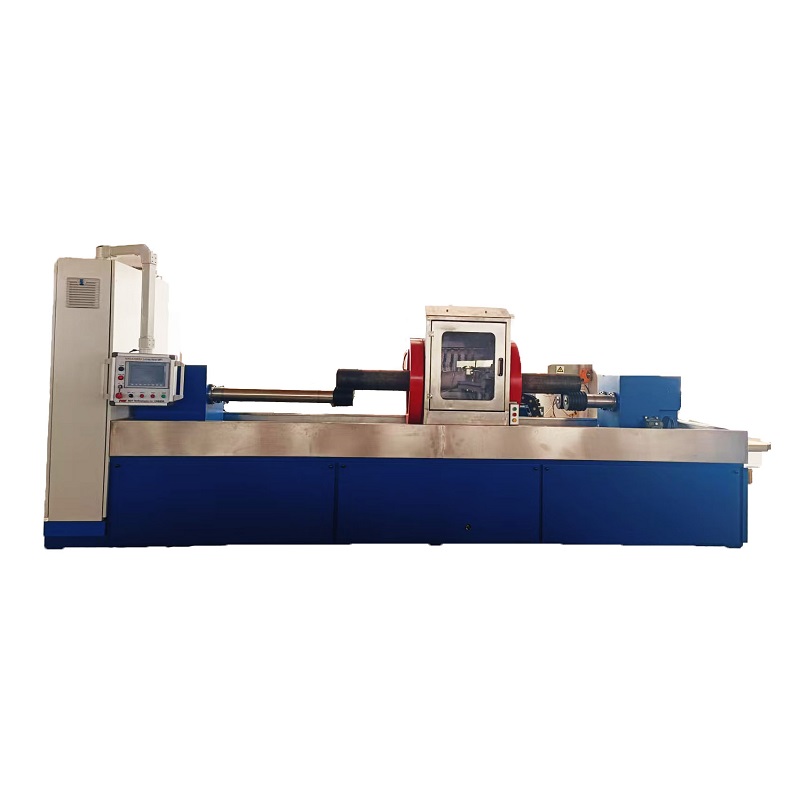
For high-volume production, an automatic shaft magnetic particle inspection machine can integrate multiple inspection operations into one system.
A typical automated system may include:
Automatic Loading
The shaft is transferred from the production line or loading area to the inspection machine.
Positioning and Clamping
The workpiece is accurately positioned between electrical contacts or within the required magnetization area.
Magnetization
The machine applies the programmed magnetizing current according to the inspection procedure.
Magnetic Particle Application
Magnetic suspension is applied to the inspection area using a spray or circulation system.
Inspection
The operator or an automated vision system evaluates the indications under the specified lighting conditions.
Demagnetization
After inspection, residual magnetism can be removed when required by the process.
Automatic Unloading
The inspected component is transferred to the next production stage or separated according to the inspection result.
The exact automation level can be customized according to production capacity, cycle time and factory layout.
Standards and Inspection Procedures
The inspection procedure should always be established according to the applicable customer specifications and industry standards.
Depending on the market and application, magnetic particle inspection may be performed according to standards such as:
- ASTM E1444/E1444M
- ASTM E709
- ISO 9934 series
- Applicable railway, automotive or aerospace specifications
The equipment itself should be configured to support the required inspection procedure. Parameters such as magnetizing current, magnetization time, magnetic particle application and demagnetization should be considered during equipment design.
Why Workpiece Information Matters
Before selecting or designing a shaft magnetic particle inspection machine, it is important to provide the equipment manufacturer with detailed workpiece information.
Recommended information includes:
- Material
- Maximum and minimum diameter
- Maximum and minimum length
- Maximum workpiece weight
- Workpiece drawings or photographs
- Expected defect types
- Required inspection areas
- Required magnetization directions
- Production volume
- Required inspection cycle time
- Applicable inspection standards
- Required automation level
With this information, the equipment configuration can be designed more accurately and unnecessary functions can be avoided.
Customized Shaft MPI Equipment from NK NDT
NK NDT specializes in the design and manufacture of magnetic particle inspection equipment for industrial applications.
Our MPI solutions can be configured for shafts, axles, yokes, forged components and other ferromagnetic parts.
Depending on the application, the system can be equipped with:
- AC or DC magnetization
- Circular and/or longitudinal magnetization
- Wet or dry magnetic particle application
- Fluorescent inspection
- Demagnetization
- Manual or automatic operation
- Automatic loading and unloading
- Customized workpiece fixtures
- Digital control and parameter setting
- Production-line integration
Rather than using the same machine configuration for every application, we develop the equipment according to the customer’s workpiece dimensions, inspection requirements and production conditions.
Conclusion
Magnetic particle inspection is an effective non-destructive testing method for detecting surface and near-surface defects in ferromagnetic shafts.
The performance of a shaft MPI system depends not only on the magnetizing current, but also on the magnetization direction, magnetic particle application, workpiece geometry, inspection lighting, demagnetization requirements and overall equipment configuration.
For low-volume inspection, a manual or semi-automatic machine may be sufficient. For high-volume manufacturing, an automated shaft magnetic particle inspection system can improve inspection consistency, production efficiency and process traceability.
Selecting the right equipment starts with understanding the actual workpiece and inspection requirements. By providing detailed shaft dimensions, material, weight, defect requirements and production information, manufacturers can develop an MPI solution that is appropriate for the application.
Frequently Asked Questions
Can magnetic particle inspection detect cracks in shafts?
Yes. MPI is particularly effective for detecting surface and near-surface discontinuities in ferromagnetic shaft materials, including many types of cracks.
What defects can MPI detect in shafts?
Typical indications include fatigue cracks, grinding cracks, forging cracks, quenching cracks, seams and laps.
Which magnetization method is used for shaft inspection?
Circular magnetization, longitudinal magnetization or a combination of both may be used depending on the expected defect orientation and inspection requirements.
Can large shafts be inspected automatically?
Yes. Automatic MPI systems can be designed for large and heavy shafts. The machine configuration depends on shaft dimensions, weight, production requirements and available factory space.
What information is needed to select an MPI machine for shafts?
The most important information includes shaft diameter, length, weight, material, inspection areas, expected defects, required magnetization directions, production volume and applicable standards.
Can NEWK NDT customize a shaft magnetic particle inspection machine?
Yes. NK NDT can develop customized MPI equipment according to workpiece dimensions, inspection requirements, production capacity and automation requirements.
Contact NEWK NDT for a Customized Shaft MPI Solution
If you are looking for a magnetic particle inspection machine for shafts, axles, yokes or other ferromagnetic components, contact NK NDT with your workpiece drawings, dimensions and inspection requirements.
Our engineering team can evaluate the application and recommend a suitable MPI equipment configuration.